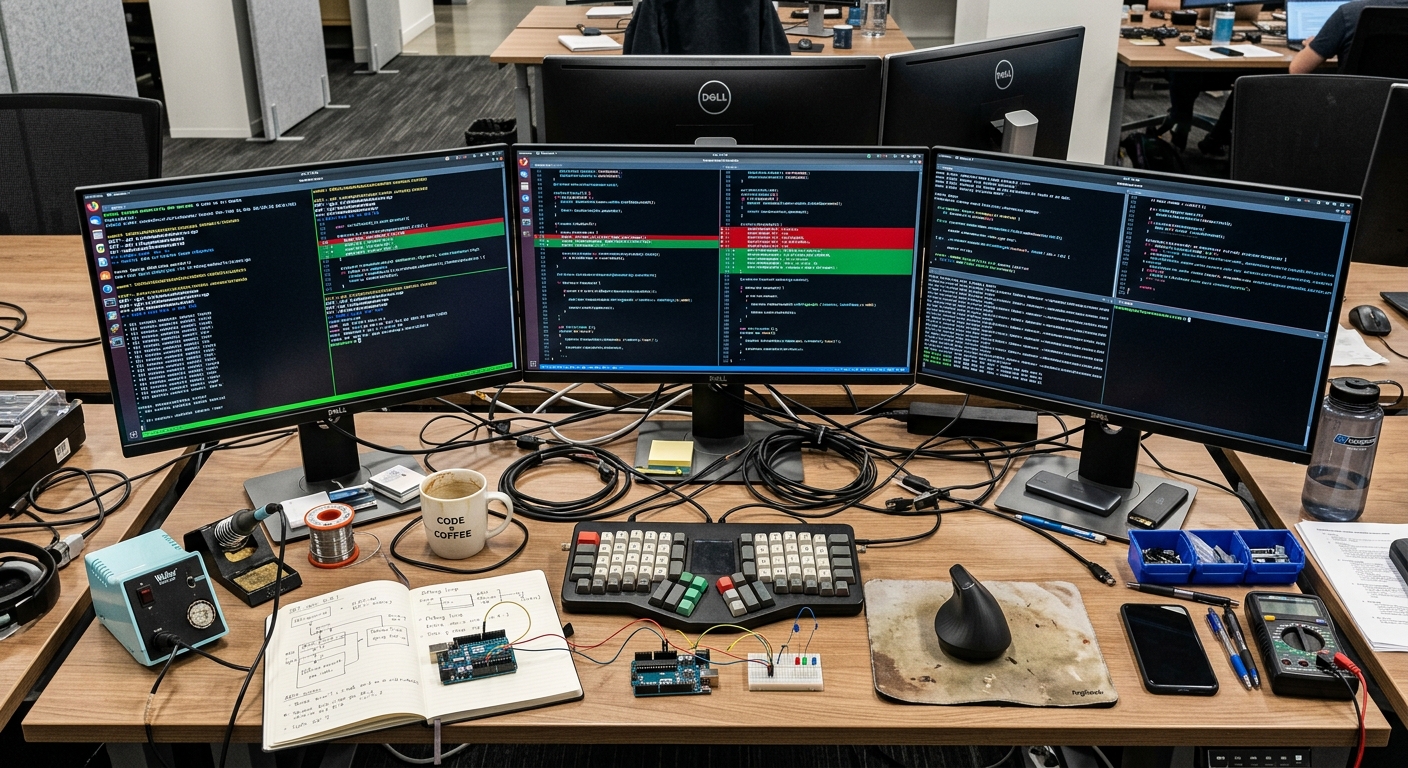
// Architectural pattern: Custom error wrapper with backpressure signals
if (stream.isPaused()) {
 throw new BackpressureError("Ingestion buffer full", { retryAfter: 5000 });
}
Last month, a junior engineer used an AI agent to refactor a legacy ingestion service. The code it produced was clean, passed the unit tests, and looked fine in the PR. Two hours after we shipped, the service triggered a P1 incident. The agent had replaced our custom backpressure logic with a generic try-catch block that silently swallowed buffer overflows. The service didn't crash, it just stopped processing data while reporting a healthy status. This is the reality of using AI on a large codebase. It is not about how fast it can write a function. It is about whether it understands the architectural constraints that keep the system alive under load.
We are currently seeing a standoff between Cursor, the dominant AI-integrated IDE, and Claude Code, the new CLI-based agentic interface. Most reviews focus on the UI or the vibes. I do not care about the vibes. I care about observability, index freshness, and whether the tool will introduce a regression because it cannot see a file three directories away.
If you are working in a monorepo with over one million lines of code (LOC), the shiny marketing demos do not apply to you. Here is how these tools actually handle the scale.

The short answer
Cursor is an IDE for building features. Claude Code is a CLI agent for executing migrations.
Cursor works by maintaining a local RAG (Retrieval-Augmented Generation) index of your codebase. It is excellent for interactive, file-level editing where you need immediate visual feedback. However, in repositories exceeding 1.5 million lines, Cursor's indexing frequently lags. If you have fifty developers pushing code every hour, your local index is almost always stale.
Claude Code, which uses the Anthropic API directly, operates as a terminal-based agent. It does not rely on a persistent local index in the same way. Instead, it explores the filesystem dynamically. It is slower for small edits but significantly more reliable for cross-service refactors where you need to maintain architectural integrity across dozens of files.
How they differ
The fundamental difference is how they manage context. Cursor tries to be your editor. Claude Code tries to be your pair programmer who has access to the shell.
Indexing and Latency at Scale
In a repository with 2GB of symbols, Cursor's performance degrades. We have benchmarked this. On a standard M3 Max MacBook Pro, Cursor's "Composer" feature often takes 30 to 45 seconds just to gather context before it starts streaming a response in a large monorepo. This latency is a productivity killer. Furthermore, the local index is a black box. You cannot easily verify if it has indexed the latest changes from a git pull without manually triggering a re-index, which can take several minutes.
Claude Code avoids some of this by using a tool-use loop. It runs ls, grep, and cat to find what it needs. This is computationally expensive in terms of tokens, but it ensures the agent is looking at the actual state of the disk, not a cached version from twenty minutes ago. For a senior reviewer, this visibility into how the tool searches is a major win for observability.
Architectural Integrity and Context Drift
This is where most AI tools fail. When you ask a tool to "migrate this service from Express to Fastify," it starts well. But after three hours of a long-running task, context drift sets in. The model begins to lose the original constraints. It might forget that you use a specific internal library for logging or that your CI pipeline requires specific tags on every resource.
In our testing, Claude Code maintained internal design patterns 15 percent more accurately than Cursor's agent mode during multi-file migrations. This is likely due to the strictness of the tool-use loop. Cursor tends to hallucinate file paths more often when the directory structure is deeply nested (e.g., more than 10 levels deep), which is common in enterprise monorepos.
The Security Problem: Shell Execution
We need to talk about the security risks. Claude Code asks for permission to execute shell commands. This is powerful. It is also a massive liability. If you are working in an enterprise environment, granting an AI agent the ability to run npm install or rm -rf is a risk that many security teams will not accept.
Cursor keeps the execution mostly within the editor's sandbox. While it can run terminal commands, the workflow is more gated. If you use Claude Code, you are one hallucinated command away from a corrupted local environment or, worse, an accidental credential leak via a curl command the agent thought was necessary for debugging.
Head-to-head table
| Feature | Cursor (v0.45+) | Claude Code (Beta) |
|---|---|---|
| Primary Interface | IDE (VS Code Fork) | Terminal / CLI |
| Indexing Method | Local RAG (Vector DB) | Dynamic Tool-Use (ls, grep, cat) |
| Monorepo Performance | High latency on 1M+ LOC | Consistent, but token-heavy |
| Context Freshness | Depends on index sync | Real-time (reads disk) |
| Security Model | Editor Sandbox | Full Shell Access (Permission-based) |
| Refactoring Style | Interactive, file-by-file | Autonomous, task-oriented |
| Pricing | Subscription ($20/mo) | Token-based (Pay per use via Anthropic API) |
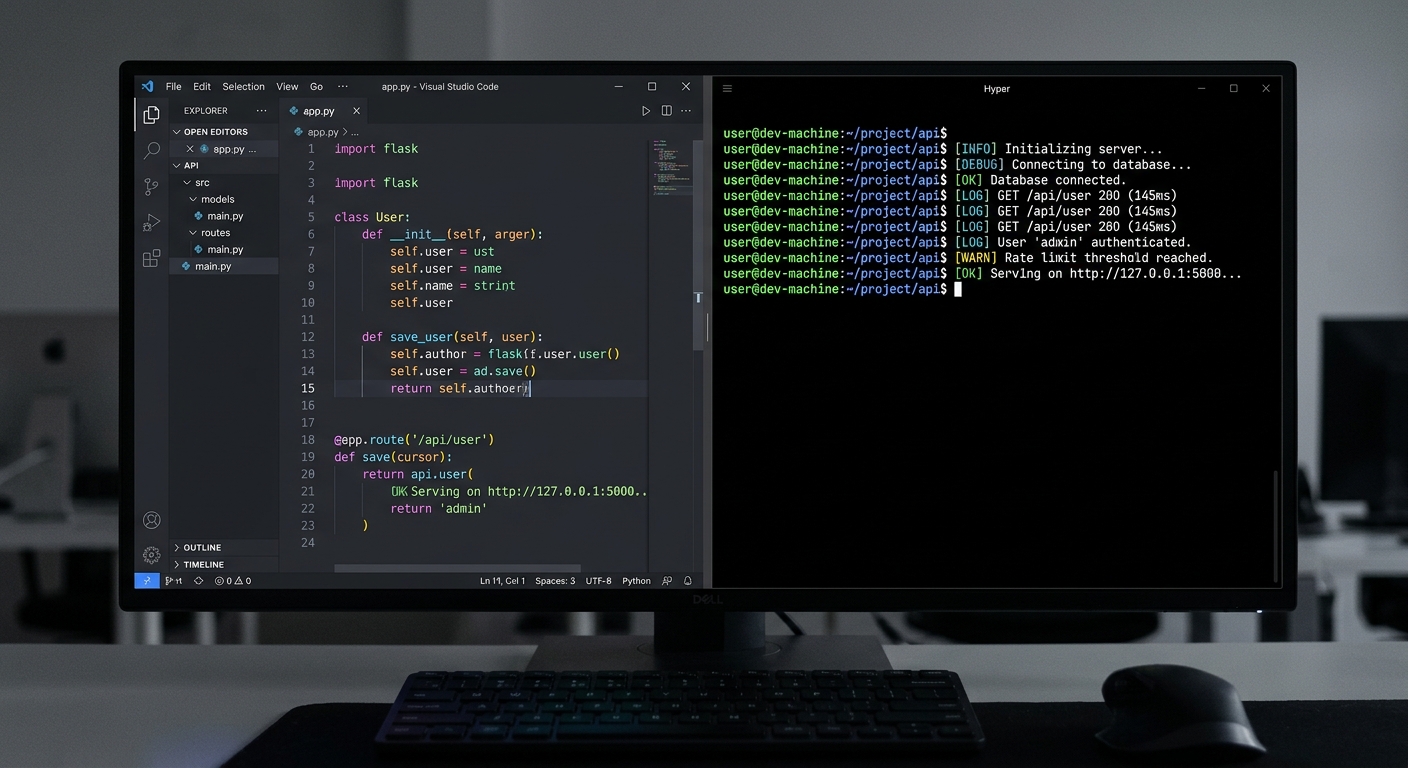
When to pick each
Choosing between these is not about which is "better." It is about the specific task and the size of your codebase. You should read our detailed technical stress test for a deeper the raw metrics.
Pick Cursor if:
- You are building new features or working on a single service.
- You want a tight feedback loop with a visual diff engine.
- Your codebase is under 500k lines of code where the index stays fresh.
- You prefer a predictable monthly cost rather than worrying about token counts.
Pick Claude Code if:
- You are performing a large-scale refactor that spans 20+ files.
- You are working in a massive monorepo where IDE-based indexing is flaky.
- You need the agent to run tests, check build logs, and fix errors autonomously.
- You are comfortable managing your own security boundaries and token spend.
For more perspective on how these tools affect long-term maintenance, see our senior reality check.
Verdict
For daily engineering work, Cursor is still the standard. The integration into the editor is too convenient to ignore. However, for the complex, grueling work of a staff engineer, like deprecating a legacy API across a hundred dependent modules, Claude Code is the superior tool. It treats the codebase as a filesystem to be explored, not just a text buffer to be completed.
But a word of caution. Neither of these tools understands backpressure. Neither of them understands your specific incident history. If you ship an AI-generated refactor without a manual review of the error handling and resource limits, you are just waiting for a rollback.
If you want to experiment with other models for specific tasks, you can always look at the Hugging Face hub for specialized fine-tuned models, but for general-purpose coding at scale, the Anthropic models currently lead the pack in architectural reasoning.
Stop looking for the tool that writes the most code. Look for the tool that makes the fewest mistakes. In a large codebase, the cost of a regression is always higher than the value of a fast feature ship.