
I cut our external contractor spend by 74% in Q1. We did not do this because I am a sociopath. We did it because the unit economics of a human freelancer no longer make sense for 80% of our repetitive technical tasks. If you are still paying a $50 per hour rate for basic React components, asset generation, or data cleaning, you are burning margin for no reason.
When I look at a P&L, I see contractors as variable costs that scale linearly with friction. AI tools are fixed costs that scale exponentially with output. The payback period on a $20 per month Pro subscription is often less than three hours of work. If your activation energy for a new project involves a two week onboarding for a freelancer, you have already lost.
Why this list
Most founders treat AI as a research toy. I treat it as a way to fix a broken retention curve in our dev ops. We used to hire contractors for every spike in workload. Now, we use agents. This list exists because I am tired of seeing founders complain about burn while they pay humans to do things a terminal command can do in six seconds.
I look for three things in a tool: unit economics, speed to first output, and exportability. If a tool locks my data in a proprietary silo, it is a liability. If it costs more than the human it replaces when scaled, it is a failure. The tools below passed the math test.
1. Claude Code
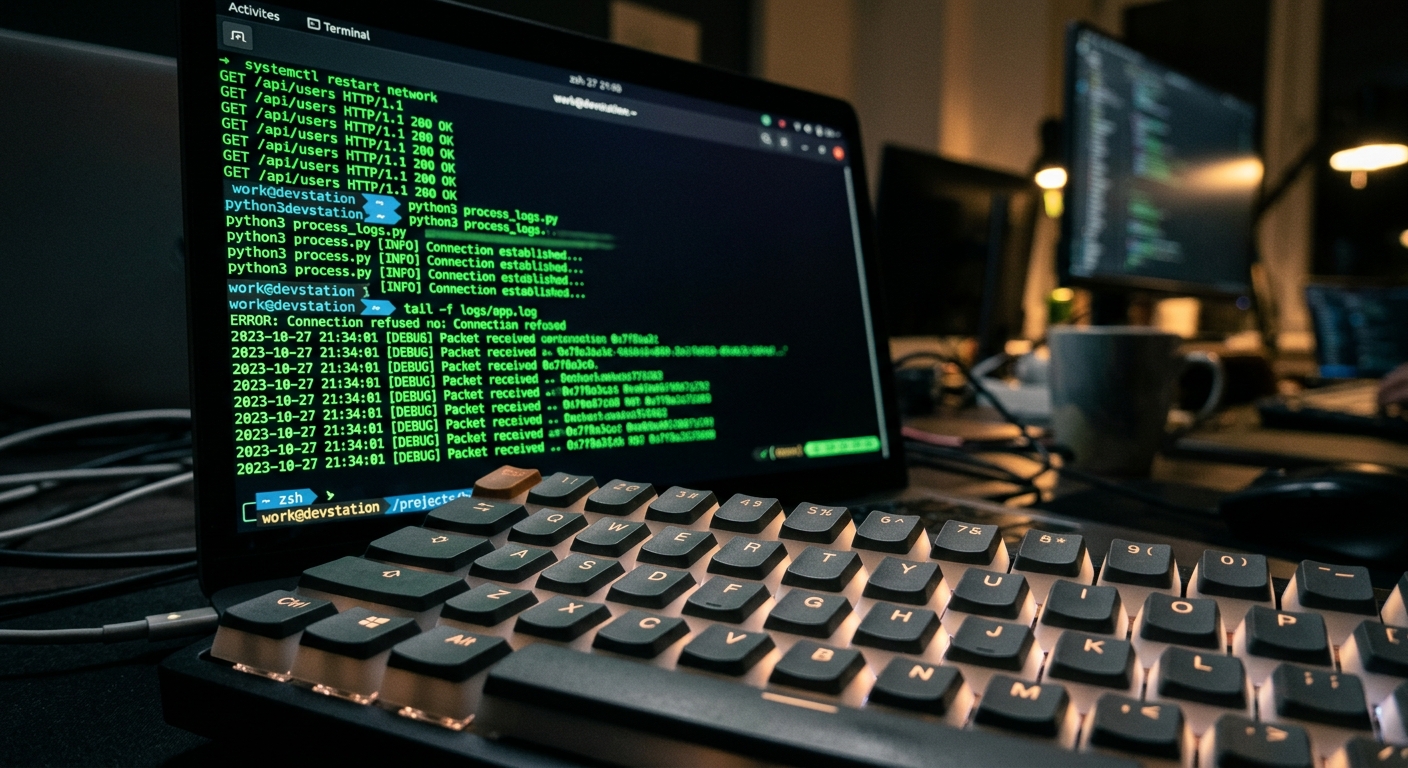
We used to keep a junior developer on a $2,500 monthly retainer for bug fixes and small feature updates. I replaced that entire workflow with Claude Code. This is not a wrapper. It is a terminal based agent that actually lives in your file system.
Claude Code excels because it does not just suggest code. It executes commands, runs tests, and fixes its own mistakes. When we were evaluating Claude Code vs Cursor for Large Codebases, the differentiator was the agentic nature of the CLI. You can tell it to "refactor the auth middleware and do not stop until the tests pass."
From a dollar perspective, the cost is purely usage based via the Anthropic API. On a heavy day of refactoring, I might spend $12. A contractor would have charged for an eight hour day, roughly $400, and likely would have introduced a merge conflict. You can find the primary documentation at the Anthropic docs.
2. Lovable
If you are hiring an agency to build a MVP, you are wasting capital. We used Lovable to ship a full stack internal tool for our sales team in 48 hours. The total cost was the subscription fee.
Lovable is an AI app builder that actually understands state management and database schema. It has a native Supabase integration, which means you are not just building a mockup. You are building a live application with a real backend. Most "no code" tools fail because they are hard to leave. Lovable is different because it writes clean code that you can actually export and host elsewhere if you need to.
| Feature | Agency Approach | Lovable Approach |
|---|---|---|
| Time to MVP | 4 to 6 weeks | 2 days |
| Initial Cost | $10,000+ | $20 to $50 |
| Maintenance | $100/hr | Included in sub |
| Data Control | Managed by agency | Native Supabase |
3. Stable Diffusion
Graphic design contractors are the first place most startups leak cash. We used to spend $800 a month on custom blog headers and social assets. Now, we run Stable Diffusion locally.
Because it is open source, our marginal cost per image is effectively zero after the initial hardware investment. We do not pay per generation like you do with Midjourney. This is a massive win for unit economics. If you have a decent GPU, you can generate 1,000 variations of an ad creative for the price of the electricity it takes to run the fans. For those who want to see the source, check out the Stability AI site.

4. Gemini
I am skeptical of most AI assistants because they hallucinate on large datasets. However, Gemini is the only tool we found that could replace a virtual assistant for document heavy workflows. Its 2 million token context window means I can dump an entire year of meeting transcripts and financial statements into it and ask for a specific trend analysis.
We specifically used it to automate client reporting with AI. A task that used to take a contractor four hours every Friday now takes a script and a Gemini prompt about 30 seconds. The Workspace integration means it can pull directly from Sheets, which removes the friction of manual data entry.
5. Suno
This is a niche replacement, but it saved us $1,200 on a recent video campaign. We needed high quality, custom background music that did not sound like generic stock tracks. Typically, you would hire a sound designer or pay for a high end license.
Suno generates full songs with vocals and instrumentation that are indistinguishable from professional studio work. The Pro plan gives you commercial rights for a fraction of what a single custom track would cost. We use it for podcast intros, ad backgrounds, and internal demo videos. It is the definition of a tool that turns a specialized skill into a commodity.
What to try first
Do not try to replace your entire team at once. Start with the tasks that have the highest CAC and the lowest complexity. Here is the framework I use to decide what to automate first:
- List every contractor invoice from the last 90 days.
- Identify which tasks took more than 5 hours but required zero strategic decision making.
- Run those tasks through Claude Code or Gemini first.
- Measure the time saved versus the API cost.
If the ratio of human cost to AI cost is greater than 10 to 1, the human is no longer viable for that specific task. In my experience, for technical documentation and unit testing, that ratio is closer to 50 to 1.
Stop thinking about AI as a helper. Start thinking about it as a line item on your COGS that you can finally optimize. The founders who survive the next 24 months are the ones who stop overpaying for manual labor and start shipping with machine efficiency.